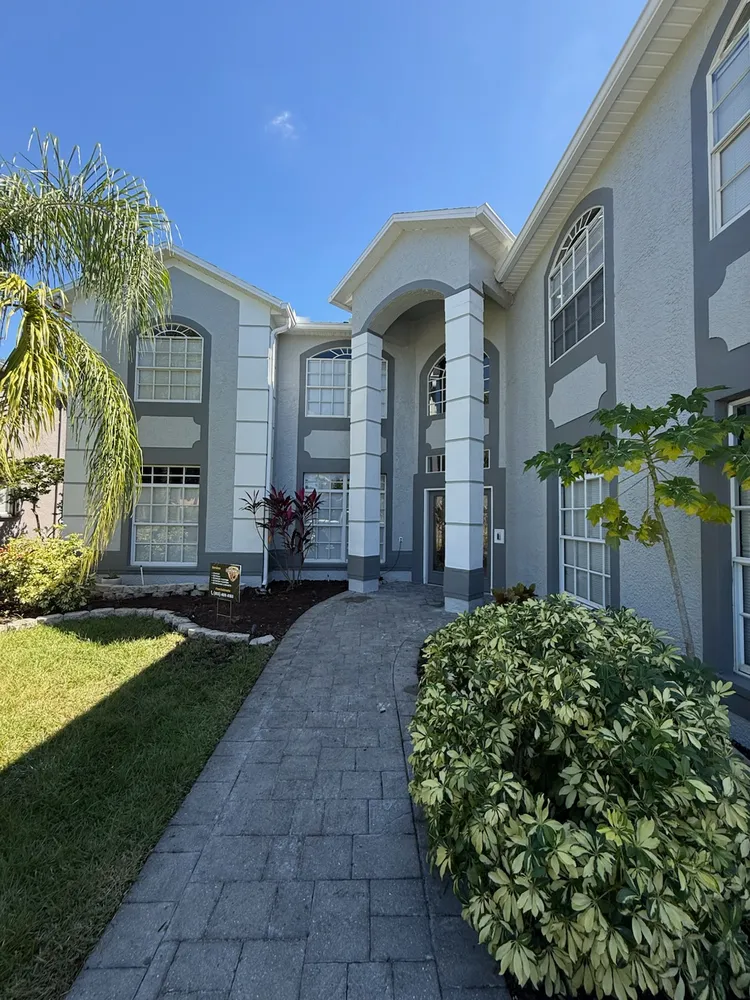
Paint fails from the surface out, not from the can — why thorough prep decides whether your paint job lasts 3 years or 10.
The paint is only as good as what's under it
Here's the truth most homeowners never hear: the paint itself is the smallest part of a paint job. What decides whether your exterior lasts three years or ten is everything that happens before the first coat goes on.
Paint is a coating system, and adhesion is the whole game. An $80 gallon of premium paint rolled over chalky, dirty, unsealed siding will fail faster than a mid-grade paint applied over a properly prepped surface. When we get called out to fix a peeling house, the paint brand is almost never the problem — the prep is.
Scraped, sanded, caulked, and primed — ready for topcoat.
What real prep actually includes
Proper prep is unglamorous, physical work — and it's most of the labor on a good exterior job. Here's what it means on our crews:
Wash the surface — dirt, mildew, and chalking all break the bond between old and new paint. We soft wash first so we're painting a clean substrate, not a dirty one.
Scrape and sand every failing edge — loose and peeling paint gets scraped to a sound edge and feather-sanded. Painting over a peeling edge just gives the new coat something to peel off with.
Caulk and seal every gap — window and door casings, trim joints, fascia boards, siding penetrations. If water can get behind the paint film, it will.
Repair damaged wood — soft or rotted trim gets repaired or replaced. No caulk or paint fixes rot; it only hides it for a season.
Prime bare spots — bare wood and metal get spot-primed so the topcoat has something to grip. Skipped primer is why you see paint failing in patches.
What happens when a house isn't sealed
Skip the caulking and sealing, and here's the sequence: rain finds the open joint, water wicks in behind the paint film, and the coating blisters and peels from underneath — not from sun damage, from water pushing it off the back side.
Worse, that trapped moisture soaks into trim, fascia, and siding. Wood rot follows, then mold and mildew inside the wall cavity. On the Gulf Coast this happens fast — our daily downpours and brutal sun cycle punish unsealed joints harder than almost anywhere in the country.
The math is ugly: a tube of quality exterior caulk costs a few dollars and minutes to apply. Replacing rotted fascia boards and re-siding a wall costs thousands. Caulk is the cheapest insurance on the whole job.
Why the cheapest quote usually skips it
Prep is labor, and labor is the first thing a low bid cuts. Two quotes can list the same paint and differ by thousands — the difference is almost always how much prep is actually in the scope.
Protect yourself with one question: ask for prep listed line by line. Wash, scrape, caulk, prime — if a quote doesn't spell it out, you're gambling that it happens. The cheapest paint job is the one you only pay for once.
Next steps
Every exterior painting quote from Ocean Crest lists prep line by line, so you know exactly what's happening before the paint goes on. Request a free estimate — we serve Pensacola, Gulf Breeze, Pace, Milton, Navarre, Cantonment, and Perdido Key.